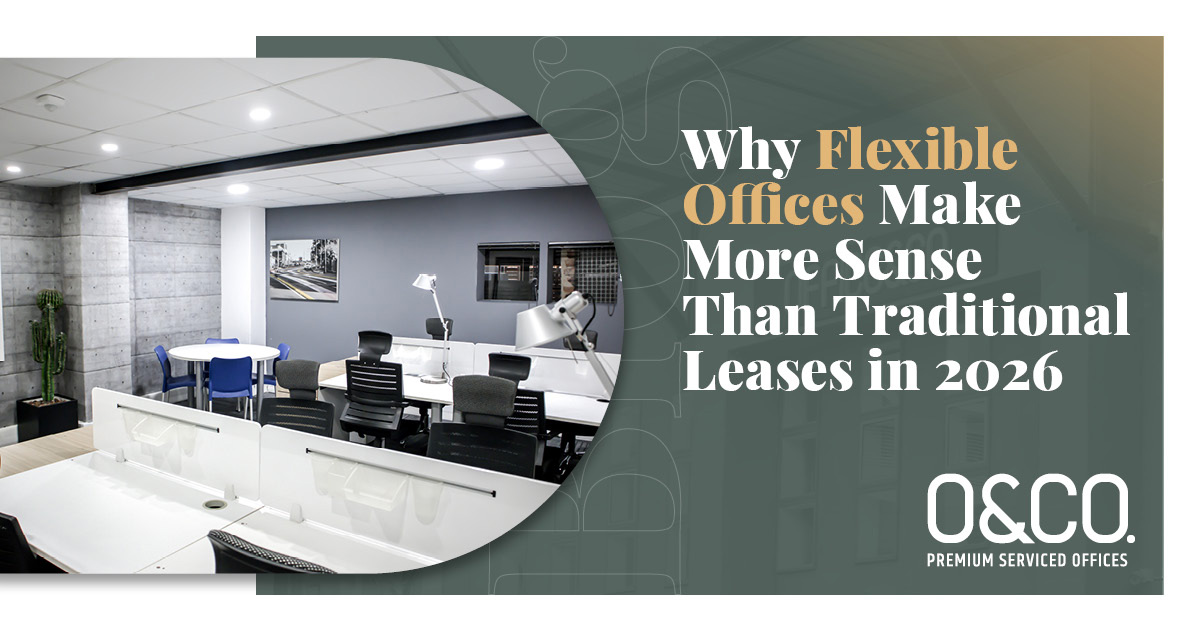
Why Flexible Offices Make More Sense Than Traditional Leases in 2026
South African employees are returning to the office, but the traditional five-day week is not. Discover how hybrid work is reshaping workplace needs and increasing demand for flexible office space.
Date:
September 21, 2026
Categories:
Why Flexible Offices Make More Sense Than Traditional Leases in 2026
South African employees are returning to the office, but the traditional five-day week is not. Discover how hybrid work is reshaping workplace needs and increasing demand for flexible office space.
Date:
September 21, 2026
Categories:
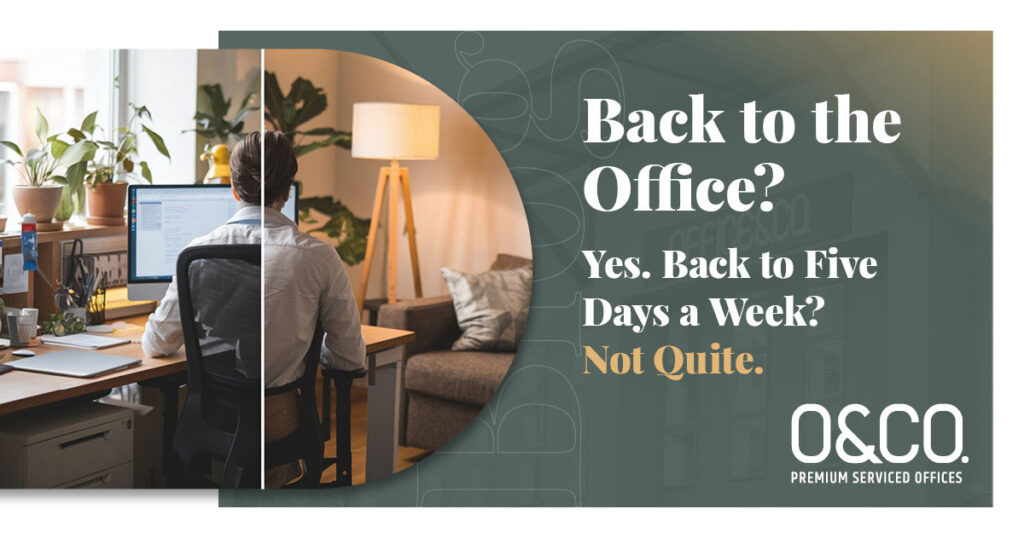 Back to the Office? Yes. Back to Five Days a Week? Not Quite.
 Is Your Office Helping or Hindering Your Team's Productivity?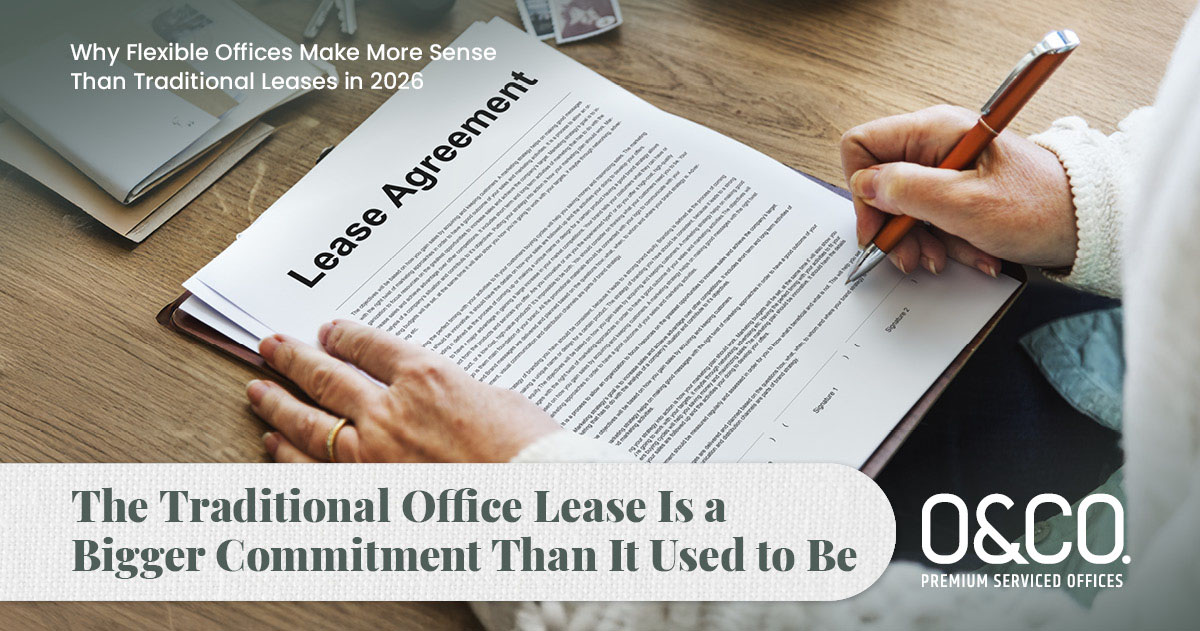
The Traditional Office Lease Is a Bigger Commitment Than It Used to Be
Signing a long-term office lease used to be a sign that your business had made it. Cue the confetti! It was time for your own front door, your own boardroom and perhaps a suspiciously expensive coffee machine nobody quite knew how to operate. You had a five-year plan jotted down in your favourite Moleskine and felt confident about the future.
But businesses don’t operate in five-year increments anymore.
Teams grow and contract, hybrid working — amplified post-Covid – means 40 employees don’t necessarily require 40 desks every day, and technology continues to change both the jobs people do and how they do them. Meanwhile, that boardroom you absolutely had to have? It’s currently sitting empty while you pay for every square metre of it.
Perhaps that’s why flexible office space is moving firmly into the mainstream.
According to Savills’ 2025 Workthere Flexmark research, corporates now account for 47% of flexible office occupancy globally, up from just 13% in 2020. And the shift is evident closer to home too: a Middle East and Africa market report cited by South African Business Matters found that 59% of businesses expanding their office footprint are choosing flexible workspaces over traditional leases.
Flexible space isn’t simply where freelancers go for Wi-Fi, nor does it appear to be a post-Covid adjustment that’s taking an unusually long time to settle. Increasingly, it’s becoming part of how established businesses think about real estate.

How About We Pay for the Office We Actually Use?
Traditional leases aren’t necessarily expensive because the rent itself is too high. Far more, it’s that you’re paying for space you don’t use, plus other expenses.
A permanent boardroom gets used twice a week and for the odd baby shower. You have 20 desks occupied on Tuesdays and Wednesdays but considerably less enthusiastically on Mondays and Fridays. And your breakout area is essential when the whole team gets together, but how often does that actually happen?
Then come the less obvious costs: fit-out, furniture, connectivity, utilities, cleaning, maintenance and all the other things required to turn an empty shell into somewhere people can actually work.
Savills points to rising fit-out, energy and maintenance costs as one of the factors pushing companies towards fully equipped flexible spaces, where much of that capital expenditure and operational complexity is removed.
Flexible offices change the math because instead of permanently paying for every space your team might conceivably need, you can use a boardroom for the afternoon, disappear somewhere quiet with a proposal for three hours, or accommodate the whole team on Thursday without worrying that half the office will sit empty again on Friday.
The goal isn’t necessarily to have less office. It’s to get more value from the office you’re paying for.
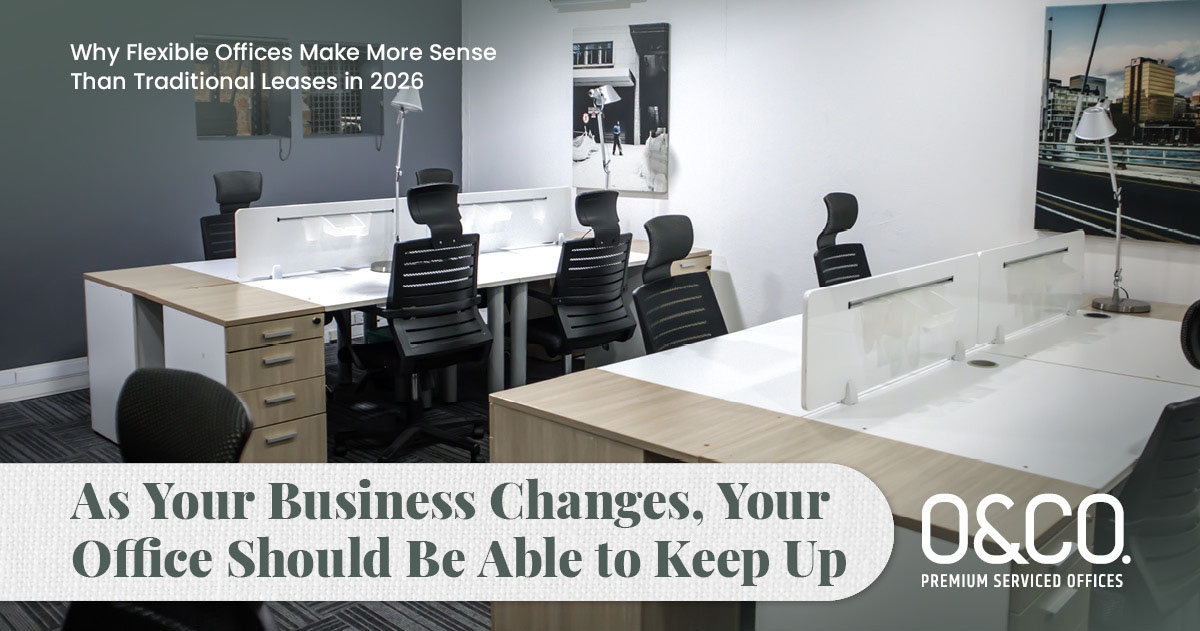
As Your Business Changes, Your Office Should Be Able to Keep Up
Predicting exactly what a business will need three or five years from now has never been easy. And in 2026 it’s getting harder.
Hybrid working has already changed how many businesses think about headcount and occupancy, while project-based teams, restructuring, expansion into new markets and rapidly changing technology can alter what a company needs from its workspace long before a conventional lease comes to an end.
Then add AI.
JLL’s 2026 Flexible Office Space Imperative identifies AI-driven workforce transformation as a significant new argument for flexibility in corporate real estate. As organisations work out which roles will be augmented, changed or created by AI, accurately predicting long-term headcount and team structures becomes increasingly difficult.
That makes locking today’s assumptions into tomorrow’s square metres a bigger strategic decision than it used to be.
Whether your team shrinks or expands places different demands on your office space, but adapting to those changes shouldn’t leave you stuck with a long-term property commitment that no longer serves you.
Flexible space gives the business room to respond, rather than asking the business to keep fitting the lease.
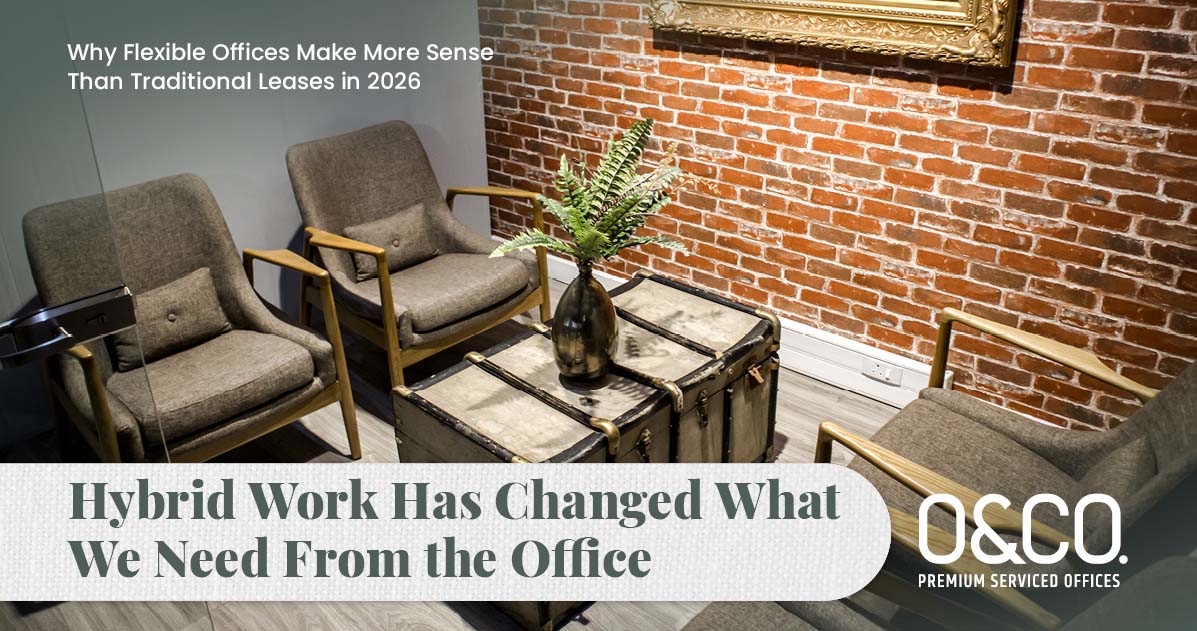
Hybrid Work Has Changed What We Need From the Office
We’ve spoken before about the fact that hybrid work isn’t necessarily killing the office but rather changing what the office is for.
If employees are coming together to collaborate, mentor, meet clients, solve problems and build relationships, it makes less sense for the majority of a company’s property spend to disappear into rows of individual desks that aren’t occupied every day.
And we’re starting to see that shift in how flexible offices are being used.
Cushman & Wakefield’s global flex research found that meeting-room bookings increased 17.4% across EMEA, 22% in the Americas and 24.5% in Asia-Pacific, which it links to a growing emphasis on collaboration-focused workplaces.
That’s an interesting distinction. Companies aren’t necessarily abandoning offices; they’re becoming more particular about what they want those offices to do.
A flexible workplace can give you focused workspaces when you need to concentrate, communal areas when you want people together and meeting rooms when there’s actually a meeting to put in them.
You’re not paying to own every possible workplace scenario simultaneously. You’re accessing the right environment when the work requires it.
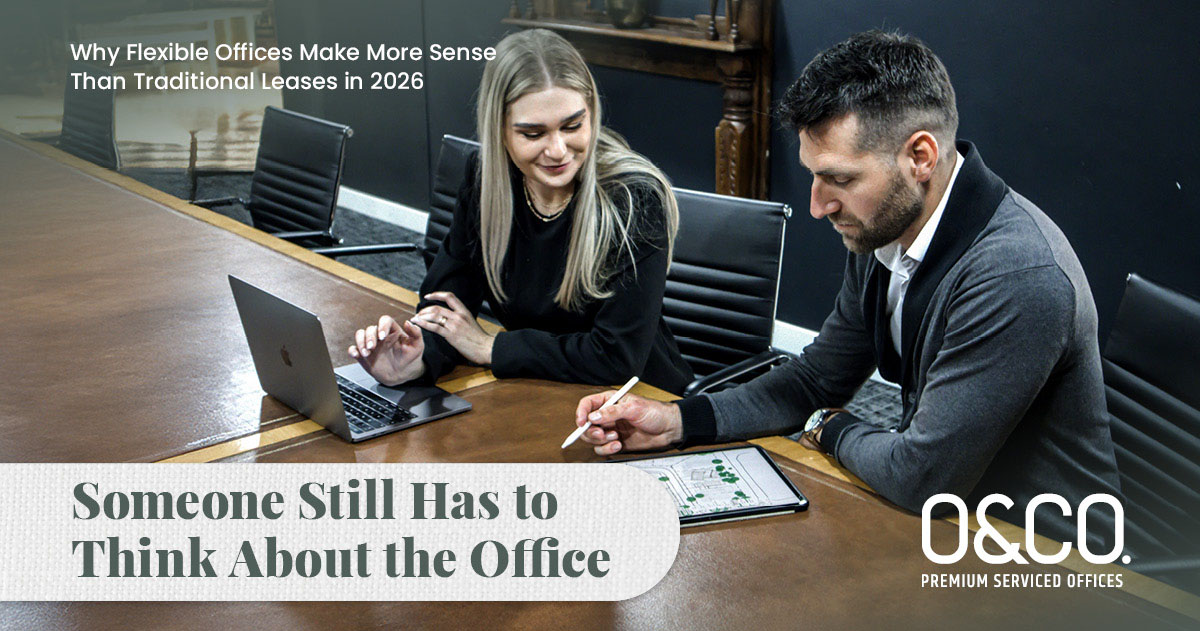
Someone Still Has to Think About the Office
There’s another cost to traditional office space that’s harder to put into a spreadsheet, and that’s the poor someone who has to make everything work.
Getting the mix right isn’t as simple as ordering a few desks and adding a plush velvet sofa, and South African workplace specialists confirm it. They’re seeing a disconnect between the spaces businesses provide and how employees actually use them. Trend Group notes that companies can find formal boardrooms sitting empty while informal breakaway areas fill up, fixed desk arrangements failing to accommodate hybrid schedules and collaboration areas becoming overcrowded while other spaces remain unused.
Having someone figure out how best to combine meeting rooms, breakrooms, bathrooms, lighting that doesn’t make you look ill and a patch of grass for ‘zen’ costs money. And when the way your team works inevitably changes, who’s redesigning the space and paying for it?
Workspace design has had to become more intentional because the expectations placed on offices have changed. And if you’re the one footing the bill, the costs can grow exponentially. McKinsey argues that offices of the future need a clearly defined purpose and should support different activities including focused work, gathering, knowledge sharing, learning and spontaneous interaction. It also points towards adaptable interiors and amenities as characteristics of workplaces designed around how people now work.
At Office & Co., much of that thinking has already been done.
Private spaces support deep work, meeting rooms exist when conversation needs a door, communal areas allow people to connect and pause spaces give people somewhere to step away before returning to the next task.
You don’t have to design an entire workplace ecosystem around every possible working mode, reshuffle it when something isn’t working or foot the bill every time your team’s needs change.
You arrive and use it.
Flexibility Isn’t Just About the Lease
This might be the most important distinction.
A flexible office isn’t simply a traditional office with a shorter contract. The flexibility should exist in the space itself.
Cushman & Wakefield reports that 55% of global occupiers now use flexible office solutions, with another 17% planning to increase their use. Its research describes agility, premium amenities and cost efficiency as increasingly important components of occupier strategy.
That helps explain why flexible workspace has moved well beyond freelancers and start-ups.
Other global coworking providers are seeing the same shift among large organisations. WeWork reported in July 2026 that one in four Global Fortune 500 companies held space somewhere within its network as of May, often alongside traditional leases and owned property rather than necessarily replacing them altogether.
That last point matters because flexible doesn’t have to mean temporary. It means adaptable.
For a business, that might mean retaining a core office while using flexible space for project teams, expansion or particular locations. For others, a flexible office can become the permanent base precisely because the space around that business can continue to change.
The point isn’t that every traditional lease suddenly stopped making sense in 2026.
It’s that businesses now have another way of approaching property – one that doesn’t require them to predict exactly how they’ll work several years from now.
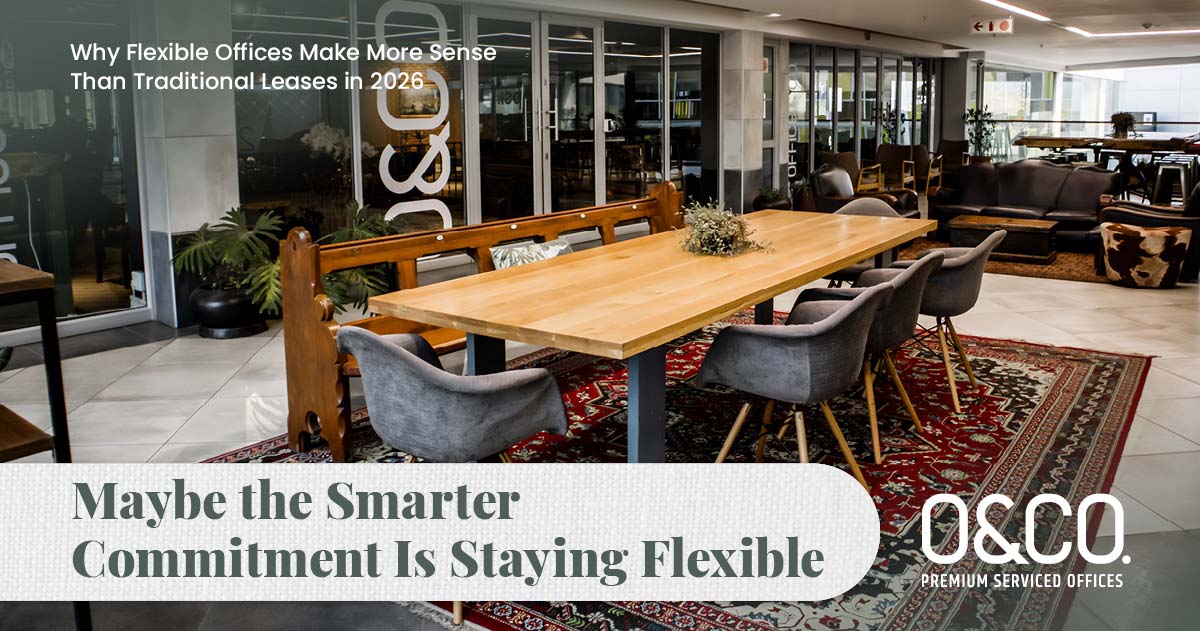
Maybe the Smarter Commitment Is Staying Flexible
Nobody can tell you exactly what your business will look like five years from now – how many people you’ll employ, how often they’ll be in the office, which roles AI will reshape or how much space those teams will need to work together.
Yet a traditional lease can ask businesses to make many of those decisions upfront. Flexible workspace gives them room to make those decisions as their needs become clearer.
At Office & Co., that means professional, intentionally designed workspaces without having to build, furnish and manage every square metre yourself – and the ability to access different kinds of space according to the work that needs doing.
Because in a business environment that’s changing this quickly, perhaps the smartest office isn’t the one that anticipates exactly what you’ll need next.
It’s the one that doesn’t require you to know yet.
Ready to Join Our Workspace Community?
If you’re looking for office space that offers flexibility, convenience, community, and modern business support tools, our client portal is part of what makes that experience different.
From meeting room bookings and equipment reservations to parking, networking events, and online canteen ordering, everything is designed to make your workday easier.
Sign up today and experience a smarter way to work:
https://crm.officeandco.co.za/