Back to the Office? Yes. Back to Five Days a Week? Not Quite.
South African employees are returning to the office, but the traditional five-day week is not. Discover how hybrid work is reshaping workplace needs and increasing demand for flexible office space.
Date:
August 27, 2026
Categories:
Back to the Office? Yes. Back to Five Days a Week? Not Quite.
South African employees are returning to the office, but the traditional five-day week is not. Discover how hybrid work is reshaping workplace needs and increasing demand for flexible office space.
Date:
August 27, 2026
Categories:
 Your Office Address Says More About Your Business Than You
The Office Is Making a Comeback. But Hybrid Work Isn’t Going Anywhere.
There was a time when working from home felt like the ultimate workplace perk. No commute. No awkward small talk in the lift. No hunting down the person who finished the milk or ate the last Krispy Kreme gifted by HR.
But then we did it. A lot.
And while few people are volunteering to hand back the flexibility that came with remote work, there is a shift afoot…
According to SAPOA’s Q1 2026 Office Vacancy Survey, South Africa’s national office vacancy rate has dropped to 12.6% — its lowest level since the second quarter of 2020. That’s a notable number of extra bums on office seats since vacancy rates peaked at 16.8% in 2022.
But this isn’t necessarily the triumphant return of the five-day office week.
Instead, businesses seem to be arriving at a more nuanced conclusion: flexibility works, but so does being together.
The future of work may be less about choosing between home and the office and more about understanding what each does best.
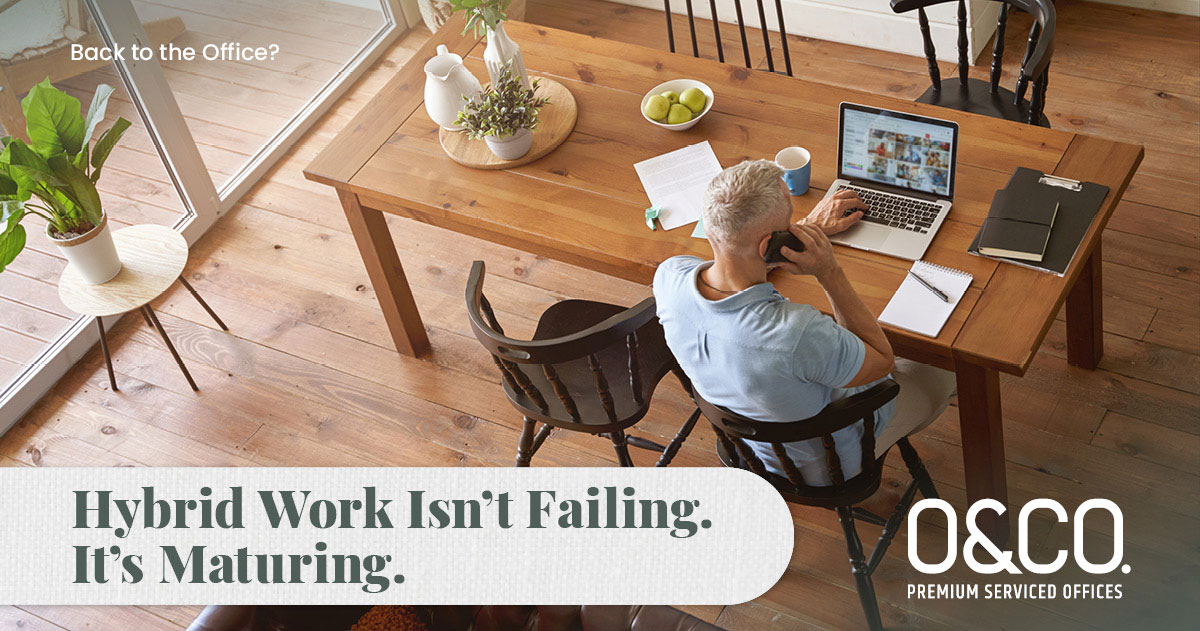
Hybrid Work Isn’t Failing. It’s Maturing.
For the last few years, the workplace conversation has been framed in absolutes. Home or office? Remote or in-person? Is it a hard no on ‘pants optional’ on work-from-home days?
But the circumstances that forced that either/or conversation have changed. During Covid, working remotely wasn’t necessarily a carefully considered workplace strategy; for many businesses, it was a matter of safety and necessity. What followed gave employees and employers an enormous real-world experiment in what could and couldn’t be done away from the office.
Now, the conversation can afford to be more nuanced. Hybrid work isn’t about choosing a winner. It’s about becoming more intentional about where different kinds of work happen. And South African research gives us good reason to preserve that flexibility, while recognising that it isn’t without challenges.
A 2025 study published in the SA Journal of Human Resource Management, examining hybrid work at an IT company in the Western Cape, noted that hybrid working can promote flexibility and work-life balance, which may support employee engagement. But the researchers also identified potential challenges, including loneliness, stress and work disturbances, which can affect performance.
That doesn’t mean the answer is simply more days at the office. It means businesses need to think more carefully about what they’re asking people to come into the office to do.
A quiet day of individual work might happen perfectly well at home. But collaboration, mentoring, relationship-building, creative problem-solving and simply spending time alongside colleagues can benefit from bringing people together.
So perhaps the question isn’t: How many days should everyone be in the office? It’s: What do we need our time together to achieve?

Some Things Really Are Harder Through a Screen
Remote work proved that an extraordinary amount of work can happen from almost anywhere. Reports can be written. Spreadsheets can be spreadsheeted. Emails can be sent from the kitchen counter, home office or in your sweats. But “work getting done” isn’t the only thing that makes a business work.
Teams also need to solve problems together. Junior employees need to learn from experienced colleagues. New starters need to understand how the business actually operates beyond what was covered in their onboarding presentation. Sometimes somebody needs to overhear a conversation, turn around and say: “Wait, I think I can help with that.”
Those moments are difficult to schedule into a 30-minute Teams call. That’s not an argument against remote work. Rather, it’s an argument for recognising what physical proximity is particularly good at.
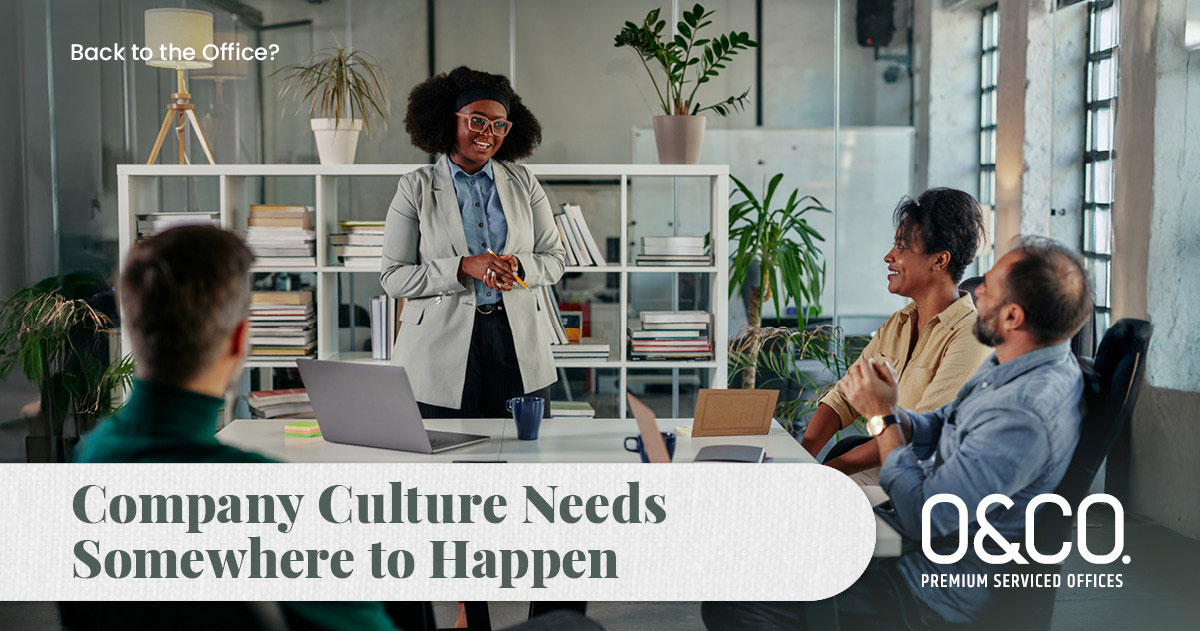
Company Culture Needs Somewhere to Happen
Most companies have values, and for the most part they’re good ones (or well-intentioned, at least). Collaboration. Curiosity. Integrity. Innovation. Possibly something about excellence.
But culture isn’t really created by putting those words on a wall. It’s created in hundreds of small interactions, like watching how your manager handles a difficult conversation or a chat after a meeting when somebody admits their original idea isn’t actually working.
Physical workplaces create opportunities for interactions to happen naturally. That matters particularly in hybrid organisations because fewer days together can make the time people do spend together more valuable. The office doesn’t need to be where all work happens, but it does need to be somewhere the right work can happen.
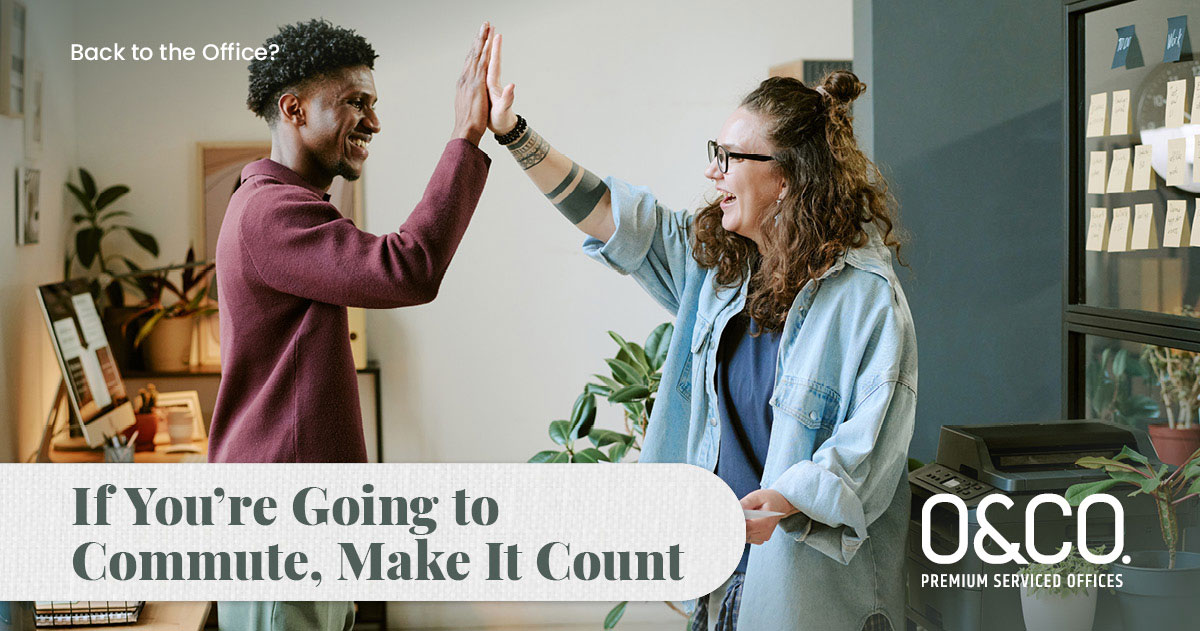
If You’re Going to Commute, Make It Count
Here’s where the return-to-office conversation gets interesting. After experiencing remote work, employees know exactly what they’re giving up when they commute – time, fuel, a little extra sleep and potentially the ability to get a jump-start on their laundry.
So simply telling people they need to return because “that’s how we’ve always worked” isn’t particularly compelling. If businesses want people to come together, the workplace needs to give them a reason to do it.
That means:
- spaces for genuine collaboration;
- private areas when you need to concentrate;
- meeting rooms where six people don’t have to crowd around one laptop;
- reliable technology;
- good coffee (please and thanks);
- communal spaces where people can actually connect; and
- an environment that makes leaving home feel worthwhile.
We’ve spoken before about the role thoughtful workspace design plays in reducing cognitive friction. The same principle applies here. The office shouldn’t simply be another place to open your laptop. It should enable the things that are genuinely harder to replicate at home.

Hybrid Work Changes What You Need From an Office
There’s another practical question businesses need to consider. If your team isn’t sitting at 40 desks for five days every week anymore, does it still make sense to pay for them? Hybrid work has changed not only how businesses use offices, but what they need from them.
A company might need private offices for its core team, meeting rooms twice a week, a larger collaboration space once a month and somewhere professional to host clients whenever necessary.
What it may not need is a large traditional lease built around maximum occupancy every day of the year. That’s where flexible office space starts to make considerably more sense. Rather than forcing the way people work to fit the property, the property can flex around the way people actually work.
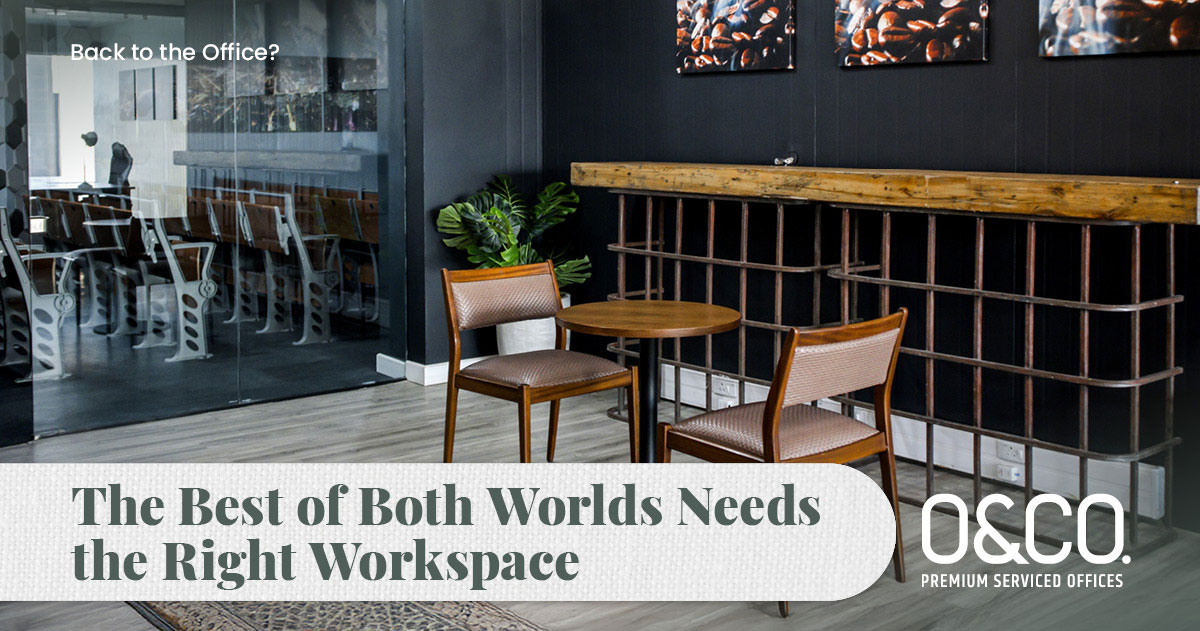
The Best of Both Worlds Needs the Right Workspace
At Office & Co., flexibility isn’t treated as the enemy of office culture. It’s the whole point.
Businesses can access professional private offices, meeting rooms, collaborative areas and thoughtfully designed communal spaces without taking on the rigidity and overheads of a traditional office setup. That gives teams somewhere worth coming together when being together matters, while also acknowledging that not every task requires everyone to be sitting in the same building at the same time.
Because the lesson from the last few years probably isn’t that the office was right all along. And it certainly isn’t that remote work was wrong. It’s that different environments are good at different things.
The future of work isn’t necessarily home versus office. It’s knowing what each does best, and creating a workplace people have a reason to choose.
Ready to Join Our Workspace Community?
If you’re looking for office space that offers flexibility, convenience, community, and modern business support tools, our client portal is part of what makes that experience different.
From meeting room bookings and equipment reservations to parking, networking events, and online canteen ordering, everything is designed to make your workday easier.
Sign up today and experience a smarter way to work:
https://crm.officeandco.co.za/