The Return to Office in South Africa Isn’t Loud, But It’s Real
Too much desk time can make you stiff, sore, and tired, but the solution is simple. Learn how to move more, stretch better, and stay healthy at work with easy tips that fit into any workday.
Date:
March 2, 2026
Categories:
The Return to Office in South Africa Isn’t Loud, But It’s Real
Too much desk time can make you stiff, sore, and tired, but the solution is simple. Learn how to move more, stretch better, and stay healthy at work with easy tips that fit into any workday.
Date:
March 2, 2026
Categories:
 Too Much Desk Time
 You’re Interrupted Every 11 Minutes at the Office. That’s Why Companies Are Taking Training Offsite
The Return to Office in South Africa Isn’t Loud, But It’s Real
For a while, it felt like offices were done for. Empty parking lots. Dark boardrooms. Teams scattered across suburbs, cities, even countries. Remote work proved itself quickly, and for many roles, it still makes sense.
But something else has been happening quietly across South Africa.
Big corporates. Medium-sized businesses. Professional services firms. They’re not shouting about it on LinkedIn, but they are bringing people back into offices. Not five days a week. Not rigidly. And not because remote work failed.
They’re doing it because managing teams, acting on strategy, and making decisions works better when people are in the same room.
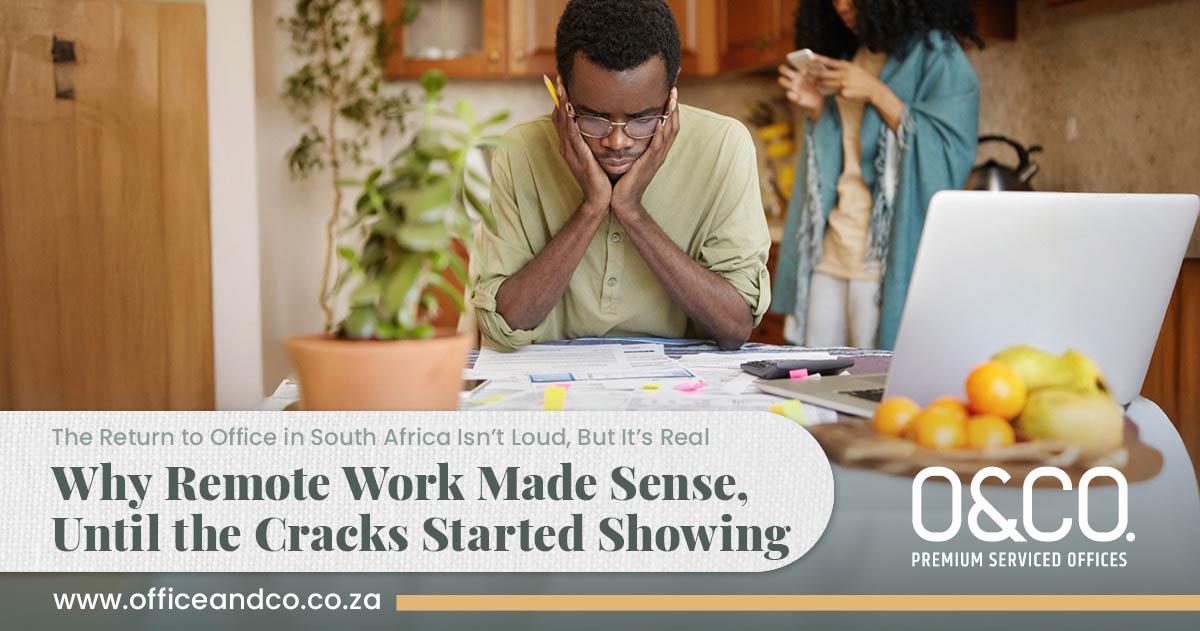
Why Remote Work Made Sense, Until the Cracks Started Showing
When South African companies first shifted to remote work, it wasn’t framed as a grand experiment. It was a practical response to uncertainty, rising costs, and disrupted routines. Offices closed, commutes disappeared overnight, and businesses discovered something unexpected, work didn’t stop. In fact, for a while, it sped up. Employees gained hours back from traffic. Overheads dropped. Teams spread out geographically, giving companies access to skills they couldn’t reach before. Flexibility became a retention tool, and morale lifted as people reshaped their days around real life, not just office hours.
But as months turned into years, the trade-offs became harder to ignore. Collaboration grew more scheduled and less spontaneous. Junior staff learned slower without overhearing conversations or asking quick questions. Meetings multiplied, yet clarity declined. Managers spent more time coordinating calendars than actually leading people. Strategy conversations became fragmented, squeezed between calls, emails, and Slack threads that never quite landed the point.
The benefits of remote work didn’t vanish, but they started to thin out. Culture became harder to feel. Accountability blurred. Decision-making slowed as nuance got lost behind muted microphones and poor connections. What once felt efficient began to feel distant. And for many businesses, especially those under performance pressure, that distance came at a cost they hadn’t planned for.
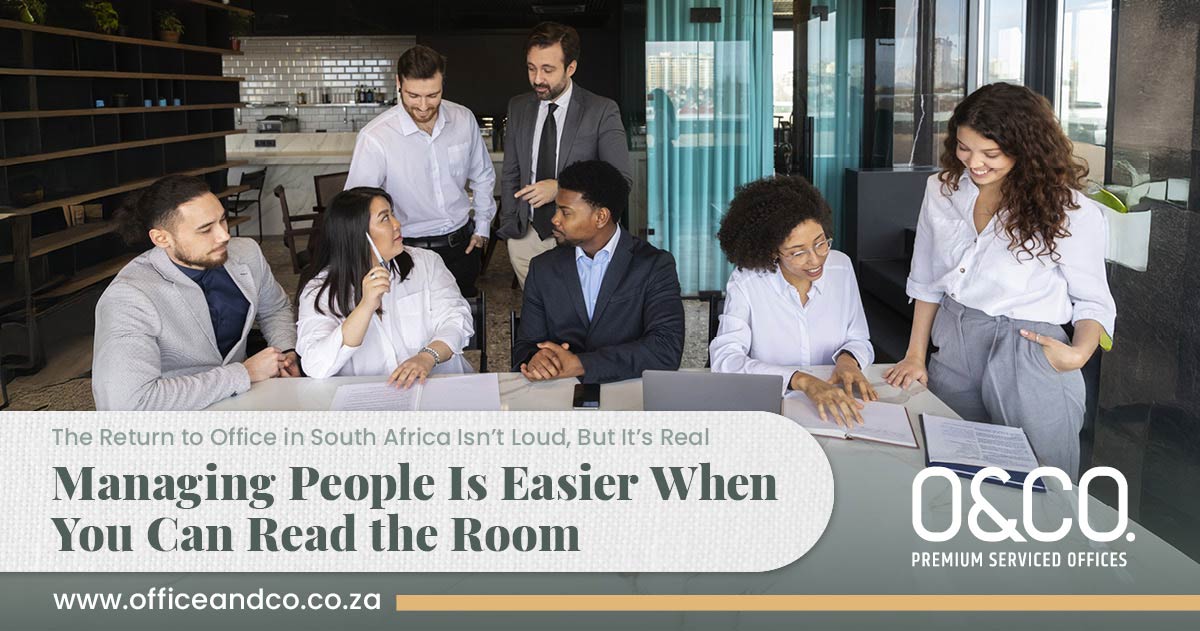
Managing People Is Easier When You Can Read the Room
There’s a difference between managing tasks and managing people.
On video calls, you hear words. In person, you notice pauses, hesitation, confidence, resistance. You see who’s leaning in and who’s checking out. You sense when a conversation needs time, or when a decision is ready to land.
South African managers are finding that performance conversations, coaching, and accountability are simply more effective face to face. Not because people can’t be trusted remotely, but because nuance doesn’t travel well through WiFi.
When teams gather in an office, even occasionally, issues surface faster. Misalignment gets corrected sooner. Decisions stick.

Strategy Moves Faster Inside Four Walls
Strategy sounds glamorous, but in reality, it’s messy.
It involves debate, uncertainty, whiteboards full of half-formed ideas, and moments where people change their minds. Trying to do that over a grid of muted microphones slows everything down.
This is one of the biggest drivers behind the return to office South Africa trend. Businesses are pulling teams together for quarterly planning, leadership sessions, and project resets because outcomes improve.
Meetings are shorter. Decisions are clearer. Action follows faster.
There’s also something psychological at play. When people step into a professional space, away from home distractions and daily noise, their thinking shifts. Focus sharpens. Conversations deepen.

Medium-Sized Businesses Are Following the Corporate Lead
While large corporates often move first, medium-sized companies tend to move with intent.
Many growing South African businesses embraced remote work out of necessity. It offered flexibility and helped manage costs. But as teams grew, cracks began to show.
New hires took longer to settle in. Culture felt thin. Leadership felt reactive instead of proactive.
For these businesses, the office isn’t about control. It’s about cohesion.
They’re using office time for moments that matter, onboarding, training, performance reviews, strategy days, and leadership alignment. Day offices and flexible spaces are replacing long-term leases, giving teams access to professional environments without unnecessary overhead.
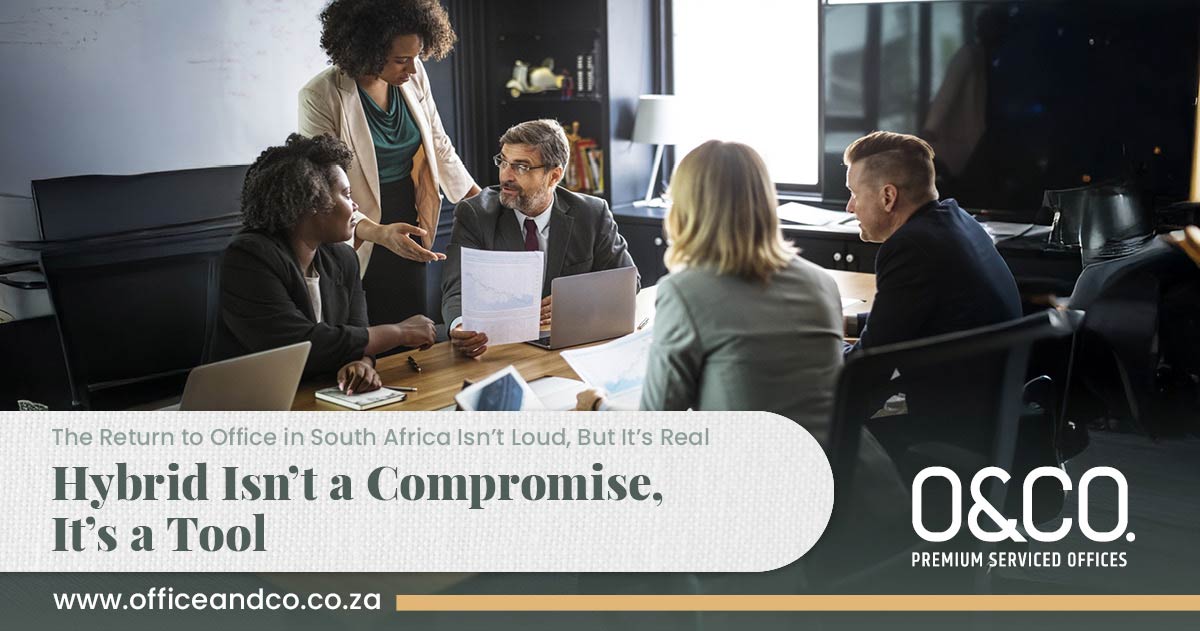
Hybrid Isn’t a Compromise, It’s a Tool
One of the biggest misconceptions around the return to office South Africa conversation is that it’s all or nothing.
In reality, the most effective teams are hybrid by design. Remote for deep work. In-person for collaboration, leadership, and planning.
The office has become a tool, not a destination.
Instead of asking, “Who needs to be here every day?” leaders are asking, “What work is better done together?”
That shift changes everything.
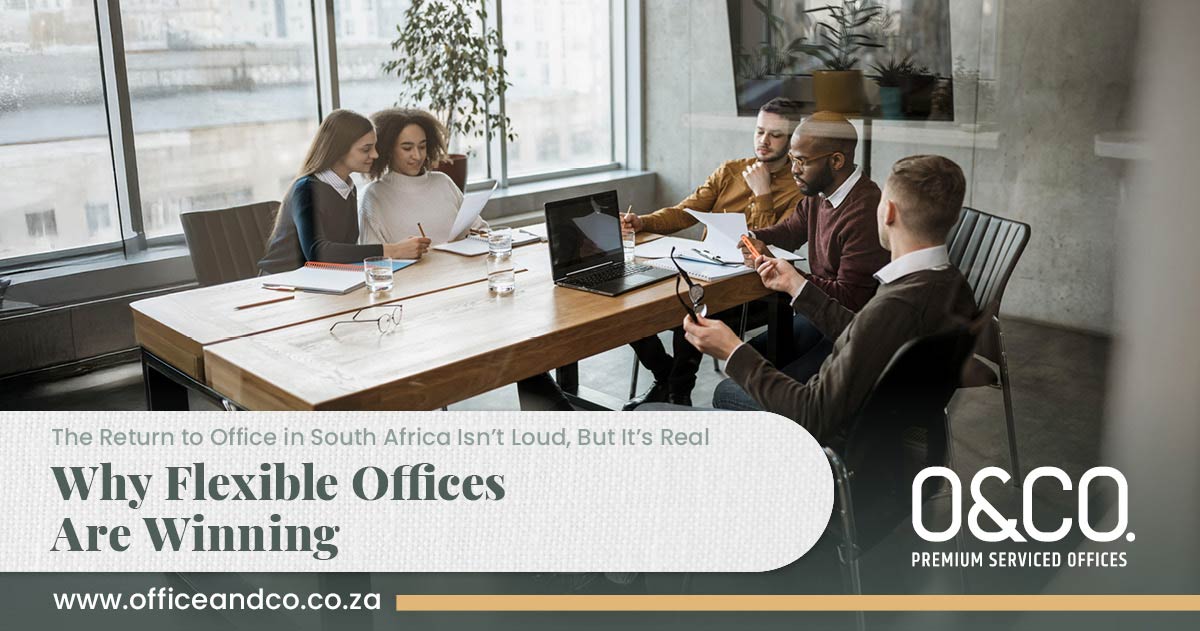
Why Flexible Offices Are Winning
Another quiet trend running alongside the return to office South Africa is the move away from traditional headquarters.
Neutral, flexible workspaces are gaining traction because they remove baggage. No corner offices. No office politics. No distractions tied to routine.
Teams arrive with purpose. They meet, plan, decide, and leave aligned.
For companies dealing with load-shedding, traffic, distributed teams, and changing work patterns, flexibility isn’t a perk. It’s practical.

The Office Isn’t Back. Leadership Is.
If there’s one thing driving the return to office South Africa, it’s leadership pressure.
Markets are tight. Growth is harder. Talent is expensive. Mistakes cost more than they used to.
Leaders need environments that help them think clearly, manage effectively, and act decisively. Sometimes, that means opening a laptop at home. Other times, it means sitting across a table from your team and having the conversation that changes everything.
The office didn’t disappear. It evolved.
And South African businesses are adjusting accordingly.
Contact our sales team today to book your tours of our premium serviced office spaces.